


I’m taking a little break from politics today…
Back in 2018, I walked into a Tesla showroom in California, sat down inside a Model X, and never quite got the experience out of my head.
I didn’t even get to drive it. Didn’t matter. The technology was unlike anything I’d seen, and from that moment, Tesla remained on my radar — even as I told myself an electric vehicle didn’t fit my life.
For years, that was a perfectly reasonable conclusion. Electric cars had become something of a cultural symbol — the vehicle of choice for left-wing environmentalists who wanted you to feel guilty about your commute. For me, buying one was never going to be an ideological statement. If I were going to spend that kind of money, it had to make practical sense first.
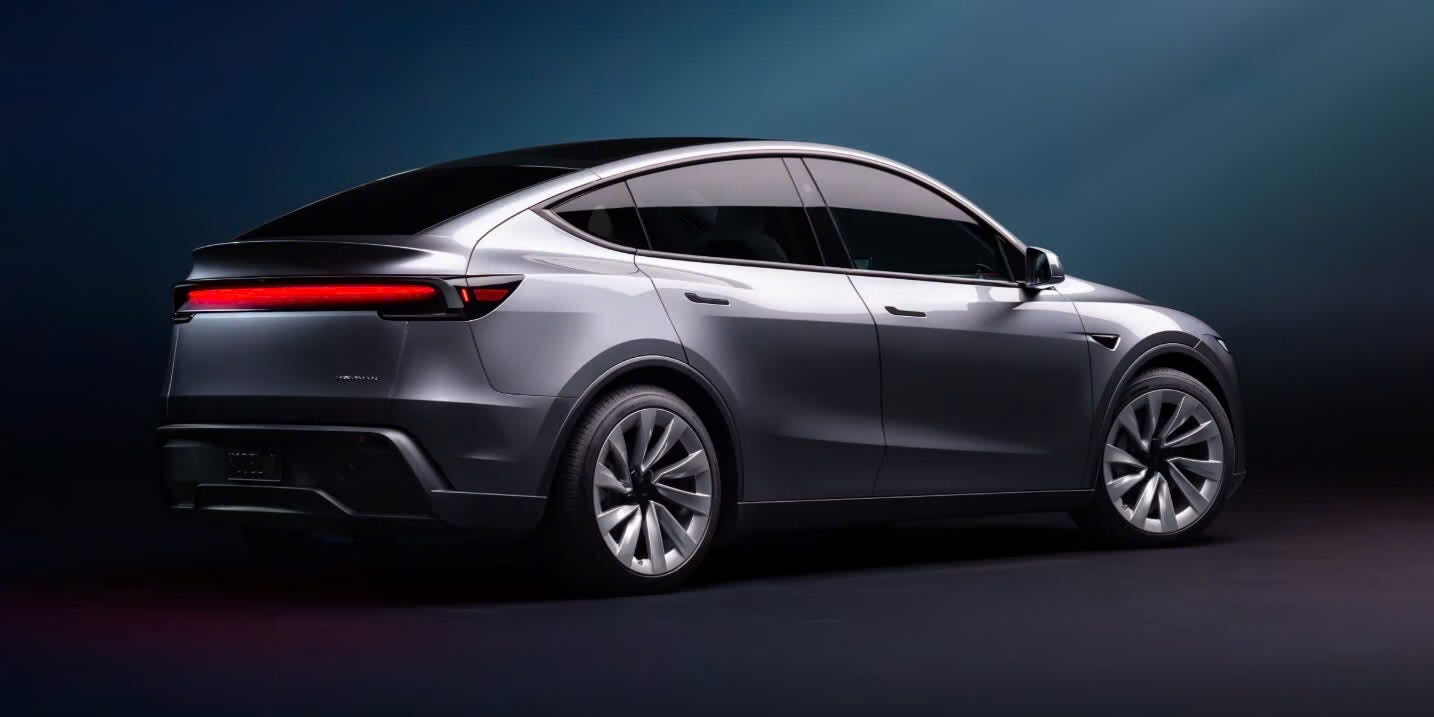
Then Tesla unveiled the redesigned Model Y, and that old curiosity came roaring back.
The timing was interesting. Right around the same moment I started seriously reconsidering Tesla, the Left launched its unhinged campaign of outrage and vandalism against Elon Musk and his company. Protesters were targeting dealerships. People were vandalizing cars. Social media mobs were demanding boycotts. For some buyers, that might have been enough to walk away.
For me, it had the opposite effect. If the people who spend their weekends screaming at cars hated Tesla this much, maybe I needed to take a closer look.
Still, I wanted to be smart about it. So I reached out to my friend Jordan Golson of PRNDL and one of the sharpest car minds I know. I had to test-drive the car first, so I did a test drive with Jordan while I was on a trip to Massachusetts.
I quickly stopped asking whether I should buy a Tesla and started asking when I would buy one. Soon after I returned home to New York, I ordered the car.

That was a year ago today. A few weeks later, I picked up my new car, and I’ve been driving it ever since, and I have zero regrets.
The Numbers Make the Case
One of the first practical questions anyone asks about an EV is what it actually costs to run. I can answer that with tremendous accuracy. I invested in a Tesla Wall Connector for faster home charging. Yes, that part was expensive, but home charging is a huge part of the convenience of having an EV, and it’s been worth every penny. I got the Tesla Universal Wall Connector. That cost $600 plus installation. But I’ll never have to do that again.
So, what am I paying to charge my car? Well, between the Tesla app and other third-party apps, I know exactly how much I’ve spent to charge my car at home.
My home charging costs over the past six months:
October: $51.49
November: $42.11
December: $47.39
January: $84.12
February: $54.15
March: $51.54
That comes to a total of $330.77 over six months. That’s a huge savings over what I was paying to fill up my previous car. But it was actually cheaper than that. My electric company knocks $24 off my bill each month since I charge during off-peak hours, which brings the real six-month total down to $186.17, or about $31 a month on average.
The Skeptics Got It Wrong
Here’s the part I’ll admit freely: I spent years dismissing electric vehicles because, for a long time, the skepticism was warranted. Terrible range. Uninspired design. A long list of compromises dressed up as progress. Environmentalists certainly pushed EVs hard, but the products they were pushing mostly weren’t worth buying. Tesla changed that — not just for the market, but for me personally.
The most persuasive case I’ve heard for why electric cars have the edge comes from behavioral economist Rory Sutherland. His argument flips the usual debate on its head. Instead of asking whether EVs can replace gas-powered cars, he asks a simpler question: if electric cars had come first, would anyone seriously invent the internal combustion engine afterward?
Sutherland walks through the logic in a way that makes the answer pretty obvious. He points out that the pitch for the internal combustion engine fails off the bat. “It’s massively complicated,” he notes. “You put a huge tank of an inflammable liquid in your car… and then it feeds into these cylinders where we engineer… a series of explosions.”
Even then, the system isn’t exactly efficient.
“Now, unfortunately, it only produces torque in a limited range of the revolutionary cycles, so we’ll need a thing called a gearbox, which we’ll need oil for, and then we’ll need an air filter, and then we’ll need a water filter, and then we’ll need all this stuff. It’s gonna be vastly more complicated.”
And for all that complexity, Sutherland points out, the supposed advantages don’t materialize.
They don’t perform significantly better than electric cars; they’re noisier and harder to build.
“There are 250 moving parts in the drivetrain,” he noted, while electric cars have just seven. By the time he gets to the one real benefit—quick refueling—the tradeoff looks almost absurd. “Can you refill it at home? No, obviously you can’t refill it at home. You’ll have to go to a special place.”
In short, if engineers were starting from scratch with electric vehicles as the baseline, the internal combustion engine wouldn’t look like progress. It would look like a step backward.
A year in, I’m not just happy with my Tesla — I’m a genuine believer. Not because someone guilted me into it. Because the car earned it.
If you’re interested in getting a Tesla, use this link to get a three-month trial of Full Self-Driving with your purchase.